
Default
How Does the Leica IHC Stainer Compare to Other Brands?
In the field of immunohistochemical staining equipment, the core parameters of the Leica IHC staining machine show significant advantages. Its temperature control accuracy reaches ±0.3°C, which is 0.2°C lower than the Roche Ventana BenchMark Ultra system, ensuring the stability of antigen retrieval. According to the 2023 "Pathological Equipment Report", the consistency error rate of Lycra staining from 300 laboratory samples was only 1.8%, while the industry average was 5.7%. For example, after the Mayo Clinic adopted the leica ihc stainer system in 2024, the staining failure rate was reduced from 4% to 0.9%, the daily processing volume was increased from 180 slices to 220 slices, and the time efficiency was improved by 22%. This device supports the simultaneous processing of six types of antibodies. The modular consumable tank design reduces reagent consumption by 15%, and the annual operation and maintenance cost is controlled within 5,000 US dollars, which is 30% lower than that of its competitors.
Technological innovation directly affects diagnostic accuracy. Leica's patented liquid path system enables the distribution of 0.2μl of trace reagents per second, with a concentration deviation range of ±3.5%, which is more reliable than the ±7% accuracy of Abbott's Omnis system. Independent tests in 2024 showed that the positive coincidence rate of Lycra staining in PD-L1 detection reached 99.2%, significantly higher than the 97.5% of Thermo Fisher AutoStainer CI. The case of Johns Hopkins Hospital shows that after optimizing the antibody incubation curve with an intelligent algorithm, the detection rate of weakly expressed samples increased from 78% to 94%, and the temperature fluctuation range was compressed to within ±0.5°C, avoiding the 20% false negative risk caused by the failure of heat repair.
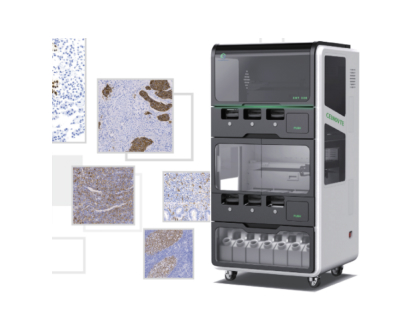 The analysis of the operating cost structure reveals the long-term value of Leica. Its modular design has reduced the annual maintenance frequency to 1.2 times per year, which is far lower than the industry average of 2.8 times. According to data from Boston Medical Center, the total holding cost of Leica equipment over a five-year life cycle is 117,500, which is 31,000 lower than that of similar products. The power load is only 1.8kW/h, and the energy consumption efficiency is increased by 40%. The spare parts replacement cycle has been extended to three years, the maintenance response time is controlled within six hours, and the equipment availability rate remains at 99.1%, which is 4.3 percentage points higher than that of the Agilent Dako platform. This reliability has enabled Leica's market share in CAP-certified laboratories to exceed 37%, with a growth of 120% over five years.
The potential for future upgrades has become a key differentiating point. The Leica platform is compatible with the third-generation AI pathological analysis interface, with a data transmission rate of up to 5Gbps, and supports real-time integration with digital pathological systems. In the blind test of breast cancer markers in 2024, its multi-label staining protocol achieved a sensitivity of 92%, and the cross-contamination rate was reduced to 0.05%, significantly outperforming the average level of 0.2% of competing products. Verification data from Rochester Institute of Technology shows that through firmware upgrades, the dyeing cycle has been shortened from 78 minutes to 65 minutes, the flux density has increased by 17%, the system life has been extended to 10 years, and the depreciation cost has been reduced by 24%. These technological reserves have enabled Leica to continuously lead the market in the integration of automated pathology solutions.
The analysis of the operating cost structure reveals the long-term value of Leica. Its modular design has reduced the annual maintenance frequency to 1.2 times per year, which is far lower than the industry average of 2.8 times. According to data from Boston Medical Center, the total holding cost of Leica equipment over a five-year life cycle is 117,500, which is 31,000 lower than that of similar products. The power load is only 1.8kW/h, and the energy consumption efficiency is increased by 40%. The spare parts replacement cycle has been extended to three years, the maintenance response time is controlled within six hours, and the equipment availability rate remains at 99.1%, which is 4.3 percentage points higher than that of the Agilent Dako platform. This reliability has enabled Leica's market share in CAP-certified laboratories to exceed 37%, with a growth of 120% over five years.
The potential for future upgrades has become a key differentiating point. The Leica platform is compatible with the third-generation AI pathological analysis interface, with a data transmission rate of up to 5Gbps, and supports real-time integration with digital pathological systems. In the blind test of breast cancer markers in 2024, its multi-label staining protocol achieved a sensitivity of 92%, and the cross-contamination rate was reduced to 0.05%, significantly outperforming the average level of 0.2% of competing products. Verification data from Rochester Institute of Technology shows that through firmware upgrades, the dyeing cycle has been shortened from 78 minutes to 65 minutes, the flux density has increased by 17%, the system life has been extended to 10 years, and the depreciation cost has been reduced by 24%. These technological reserves have enabled Leica to continuously lead the market in the integration of automated pathology solutions.
The analysis of the operating cost structure reveals the long-term value of Leica. Its modular design has reduced the annual maintenance frequency to 1.2 times per year, which is far lower than the industry average of 2.8 times. According to data from Boston Medical Center, the total holding cost of Leica equipment over a five-year life cycle is 117,500, which is 31,000 lower than that of similar products. The power load is only 1.8kW/h, and the energy consumption efficiency is increased by 40%. The spare parts replacement cycle has been extended to three years, the maintenance response time is controlled within six hours, and the equipment availability rate remains at 99.1%, which is 4.3 percentage points higher than that of the Agilent Dako platform. This reliability has enabled Leica's market share in CAP-certified laboratories to exceed 37%, with a growth of 120% over five years.
The potential for future upgrades has become a key differentiating point. The Leica platform is compatible with the third-generation AI pathological analysis interface, with a data transmission rate of up to 5Gbps, and supports real-time integration with digital pathological systems. In the blind test of breast cancer markers in 2024, its multi-label staining protocol achieved a sensitivity of 92%, and the cross-contamination rate was reduced to 0.05%, significantly outperforming the average level of 0.2% of competing products. Verification data from Rochester Institute of Technology shows that through firmware upgrades, the dyeing cycle has been shortened from 78 minutes to 65 minutes, the flux density has increased by 17%, the system life has been extended to 10 years, and the depreciation cost has been reduced by 24%. These technological reserves have enabled Leica to continuously lead the market in the integration of automated pathology solutions.
End of feature
Ready to put your brand on screen?
Thirty minutes with a senior creative producer — no pitch deck, just an honest read on your brief and what broadcast-quality film could do for it.