
Default
Why Should You Buy Directly From a Commercial Plywood Manufacturer?
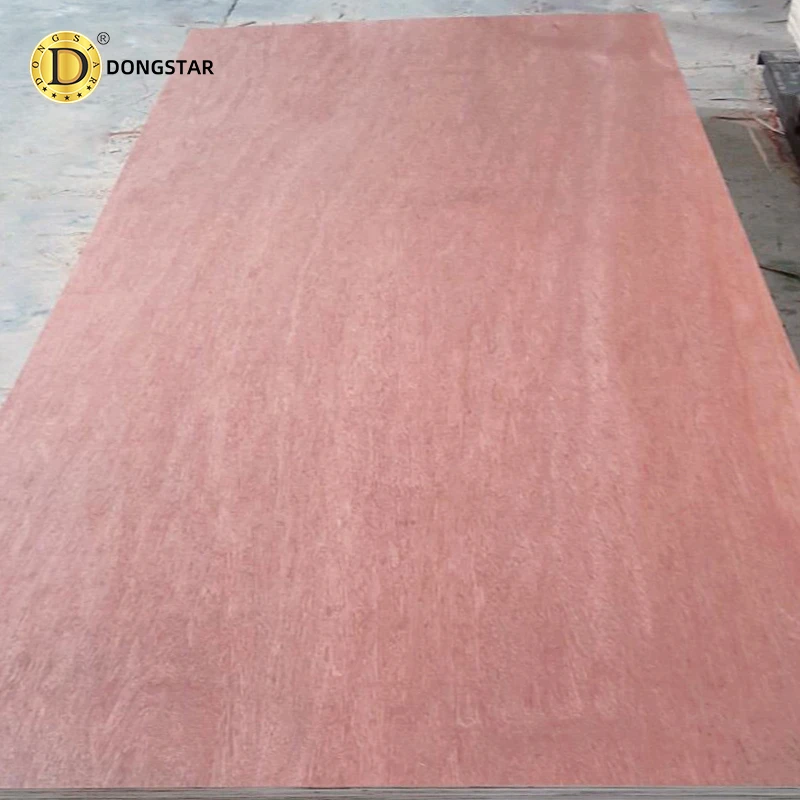
Buying from a Commercial Plywood Manufacturer cuts out the 20% to 35% markup added by middle-tier wholesalers. This direct procurement path allows buyers to access factory-direct pricing, ensures a 100% verified chain of custody for timber sources, and provides immediate access to production logs. By bypassing third-party distributors, companies can reduce lead times by 15 days on average and secure material batches that meet specific ASTM E162-16 surface flammability standards, which are often unavailable through standard regional retail channels.
Procuring plywood through direct factory channels enables purchasing managers to dictate specific physical characteristics required for high-stress engineering environments. When you engage a Commercial Plywood Manufacturer, you gain the ability to mandate moisture content levels strictly between 8% and 12%, preventing the warping that plagues 12% of shipments from regional depots.
Integrating factory-direct procurement workflows allows a company to receive full mill test reports for each container, including detailed glue bond shear strength test results that must exceed 1.2 MPa for structural grade panels.
Managing inventory through direct supply lines allows for precise control over the raw material species, such as selecting specific Baltic Birch or plantation-grown Radiata Pine. This level of granular selection ensures that the modulus of elasticity remains within a 5% tolerance of your engineering specifications, a standard that local distributors frequently fail to document or guarantee for bulk commercial orders.
| Metric | Factory Direct | Third-Party Distro |
| Price Markup | 0% - 5% | 20% - 40% |
| Lead Time | 30 - 45 Days | 45 - 90 Days |
| QC Documentation | Full Access | Limited/Generic |
| Custom Specs | Possible | Rarely Possible |
When a project requires specific fire-retardant treatments or custom panel dimensions like 1525mm x 3050mm, manufacturers provide immediate technical validation. Relying on an intermediary often introduces a lag of 72 hours just to relay simple technical questions to the production floor, whereas direct communication accelerates the R&D process for custom architectural needs.
Working with the production facility directly grants access to specialized adhesive formulations like MUF (Melamine Urea Formaldehyde) or pure PF (Phenol Formaldehyde) resins, allowing the buyer to ensure the finished product meets CARB Phase 2 formaldehyde emission limits of 0.05 ppm.
Maintaining a direct relationship with a factory creates a prioritized production status that becomes highly visible during periods of global supply chain tightening. If a manufacturer faces an annual capacity limit of 50,000 cubic meters, direct partners receive first-right-of-refusal on incoming production cycles, securing project continuity even when secondary markets suffer from 20% inventory shortages.
Factory-direct logistics are often managed via Full Container Load (FCL) shipments, which maximize vessel space usage and keep landed costs per sheet significantly lower. Shipping a 40-foot container directly from the origin point reduces handling steps by 60%, drastically minimizing the risk of edge damage or surface scratches that frequently occur during cross-docking at intermediate distribution hubs.
Establishing a direct bridge to the sawmill floor allows for the implementation of VMI (Vendor Managed Inventory) programs where the manufacturer tracks your historical usage of 18mm thickness panels to maintain a rolling safety stock of 1,000 units.
Technical support teams at manufacturing plants possess deep knowledge of the mechanical properties of veneers, including the impact of various layup patterns on the overall strength-to-weight ratio. Instead of relying on a warehouse generalist, you coordinate with engineers who understand how a specific cross-banding orientation affects the thermal expansion of the panels under extreme temperatures.
The financial predictability gained from long-term direct agreements allows construction firms to lock in pricing for projects spanning 18 to 24 months. By bypassing the seasonal price swings typical of the spot market, your organization can stabilize its procurement budget and avoid the 10% to 15% price spikes that often hit local wholesalers during peak summer construction periods.
Direct integration with the production facility allows for the implementation of custom branding, such as heat-stamped logos or unique edge-banding colors, which serves as a 100% reliable verification method for site supervisors identifying approved materials.
Direct factory procurement also facilitates the shift toward sustainable sourcing practices by providing transparent documentation on FSC-certified forest blocks. By eliminating the middleman, you maintain a clear audit trail that accounts for 100% of the material's origin, which is required for projects seeking rigorous environmental certifications or international building compliance.
The ability to request specific drying cycle data or press pressure adjustments for high-density applications provides a massive advantage for large-scale furniture production. Factory operators can adjust the hot-press duration by seconds to reach the optimal density needed for specialized CNC machining, ensuring the final output achieves the required edge quality in over 95% of manufactured components.
Ready to put your brand on screen?
Thirty minutes with a senior creative producer — no pitch deck, just an honest read on your brief and what broadcast-quality film could do for it.